
Foundation
The first technical institution of the Ukrainian Academy of Sciences
On 30 November 1918, the General Assembly of the Ukrainian Academy of Sciences resolved to establish the Institute of Technical Mechanics. It became the Academy’s first institution of a technical profile and one of the centres in which academic engineering science in Ukraine took shape.
The founder and first director was Stepan Prokopovych Timoshenko, a world-renowned scientist in mechanics and one of the founders of the Ukrainian Academy of Sciences. From the outset, the Institute focused on fundamental problems of mechanics and on applying scientific results in engineering practice.
Institutional name
How the Institute’s name changed
Each change reflected the expansion of the institution’s structure, tasks and scientific profile.
Institute of Technical Mechanics
The institution was established on 30 November 1918 by a resolution of the General Assembly of the Ukrainian Academy of Sciences. Stepan Prokopovych Timoshenko became its first director.
Institute of Structural Mechanics
In 1929, the Institute of Technical Mechanics was reorganised into the Institute of Structural Mechanics and the Cabinet of Transport Mechanics.
Institute of Mechanics
The Institute of Structural Mechanics received the name Institute of Mechanics, reflecting the substantial expansion of its scientific profile.
Named after S.P. Timoshenko
The Institute of Mechanics was named after its founder and first director, Stepan Prokopovych Timoshenko.
Scientific schools
The Kyiv school of nonlinear mechanics
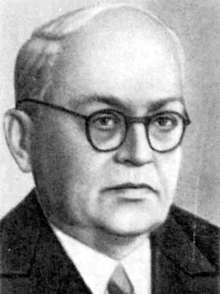
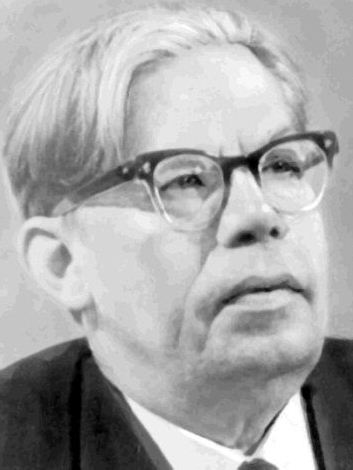
One of the foremost achievements of the Institute’s early decades was the creation by M.M. Krylov and M.M. Bogolyubov of a new scientific field: the asymptotic theory of nonlinear oscillations. Their work laid the foundations of the internationally recognised Kyiv school of nonlinear mechanics.
The early decades
Fundamental research for engineering practice
Alongside S.P. Timoshenko’s work on strength of materials and elasticity, the Institute studied the fatigue of bridge and boiler steels, developed new strength standards for structural materials, determined the physical and mechanical properties of rocks, proposed a strength hypothesis for granite, created nondestructive methods for assessing timber, and formulated criteria for the strength and durability of bridges.
The 1930s
Strength of materials and structures
Researchers studied the strength of structural steels and machine parts, fatigue similarity laws and the effects of triaxial stress states. They proposed a statistical theory of fatigue failure, built a three-component testing machine, and developed a limit-state method for calculating steel and timber structures, including components of aircraft engines.
Prominent scientists
Scientific continuity
At different times, distinguished members of the Academy worked at the Institute, including M.M. Bogolyubov, Ya.M. Hryhorenko, M.M. Davydenkov, O.M. Dynnyk, H.V. Karpenko, M.O. Kilchevskyi, M.M. Krylov, Yu.O. Mitropolskiy, Ye.O. Paton, H.S. Pysarenko, H.Y. Sukhomel, K.K. Khrenov, Yu.M. Shevchenko, R.F. Ganiev, B.M. Horbunov, B.D. Grozin, S.M. Kozhevnikov, V.M. Maizel, Yu.M. Nemish, O.M. Penkov, A.F. Ulitko, L.P. Khoroshun, I.Ya. Shtaierman and M.O. Shulha.
1941 to the late 1950s
The wartime and postwar periods
During the Second World War, the Institute continued its scientific work in evacuation. After returning to Kyiv, it restored its activities and substantially broadened the scope of its research.
Work in evacuation
Dynamic strength of structures of defence importance
During the Second World War, the Institute was evacuated to Ufa. Its researchers solved problems concerning the dynamic strength of structures of defence importance, and their work was closely connected with aircraft and transport engineering.
Work in evacuation preserved the scientific team, its research traditions and the continuity of fundamental and applied studies.
Return to Kyiv
Restoration and expansion of research
From 1944 to 1958, the Institute studied the stability of engineering structures within and beyond the elastic range and developed methods for calculating their strength, stability and deformability.
It advanced the theory and calculation of plates and shells of revolution and investigated energy dissipation in turbine-blade vibrations. Researchers discovered the phenomenon of adsorption fatigue of metals, proposed testing methods for hardened and brittle steels, and developed an integrated assessment of surface-layer wear resistance.
New scientific fields
Development of mechanics from the late 1950s
Alongside traditional studies in elasticity and thermoelasticity, shell theory, stress concentration, fatigue, strength and plasticity, major advances were made in the mechanics of composite materials with deterministic and stochastic structures, three-dimensional stability theory, wave dynamics of deformed bodies, coupled mechanical and physical fields, thermoplasticity, numerical shell methods, analytical mechanics of multi-aggregate systems and the nonlinear theory of spatial oscillations of rigid bodies.
Institutional development
A centre from which new academic institutions emerged
In 1945, the Laboratory of Agricultural Mechanics became the independent Laboratory of Mechanical Engineering and Problems of Agricultural Mechanics, from which the present-day Physico-Technological Institute of Metals and Alloys of the NAS of Ukraine later developed. The Kharkiv Branch, established in 1964 from the Laboratory of Hydraulic Machines, became one of the predecessors of the A. Pidgorny Institute of Mechanical Engineering Problems. The Institute of Technical Mechanics of the NAS of Ukraine was organised in 1980 from the Dnipropetrovsk Branch established in 1968.
Scientific achievements
From fundamental theories to engineering applications
During the second half of the twentieth century and throughout the period of independent Ukraine, the Institute established priority research fields whose results gained international recognition and practical use in high-technology industries.
Second half of the twentieth century
Priority theories and methods
Methods were developed for calculating rocket-engineering components with stress concentrations, numerical methods for studying shells of revolution of complex form, and a theory of thermoplasticity under non-isothermal deformation.
The Institute created a three-dimensional theory of stability of deformable bodies, a theory of waves in initially stressed bodies, and an ultrasonic method for determining biaxial and triaxial stresses. It advanced nonstationary hydroelasticity of shells, elastic-wave diffraction, prediction of composite properties and the method of matrix-valued Lyapunov functions.
Independent Ukraine
Internationally recognised results
International recognition was achieved in the mechanics of composites and nanocomposites, nonclassical fracture problems, coupled-field mechanics, and the dynamics and stability of complex nonlinear systems.
Researchers advanced theories of anisotropic laminated shells, thermoviscoplasticity, impact interaction of bodies with fluids and elastic media, material deformation and damage, and new methods for solving contact, thermoplastic and nonlinear shell problems.
Engineering practice
Strength, reliability and durability of structures
The Institute’s theoretical and experimental results have been applied in aerospace, aviation, shipbuilding and other industries. Leading research, design and engineering organisations and enterprises in Ukraine and other countries have used these results to assess the strength, reliability and durability of materials and representative structures.
Institutional leadership
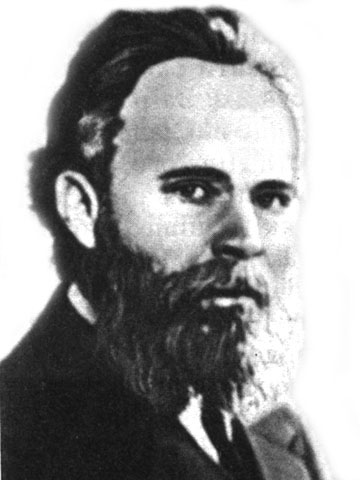
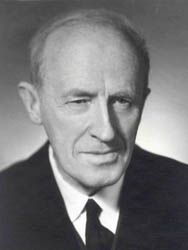
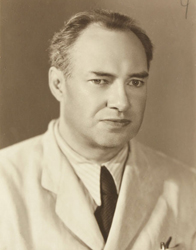
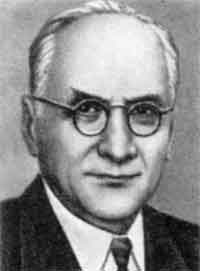
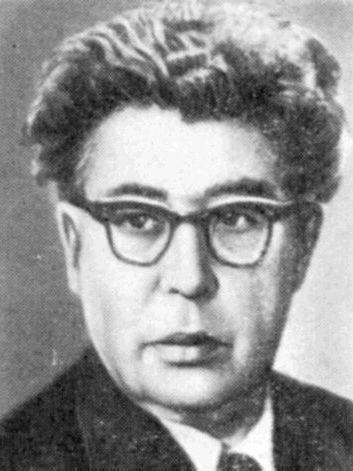
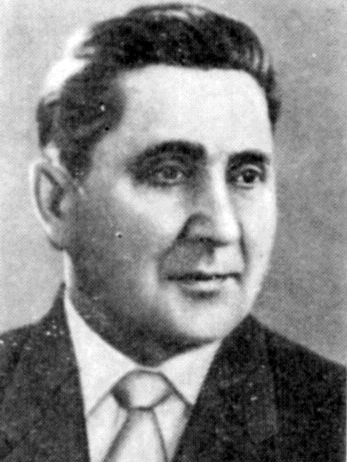
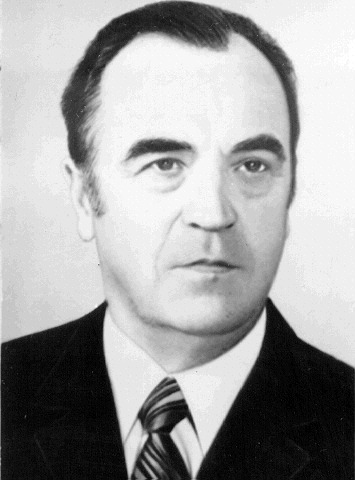
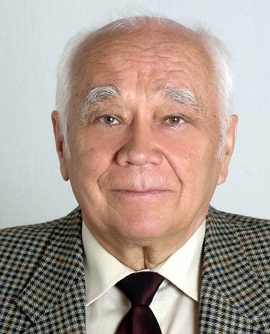
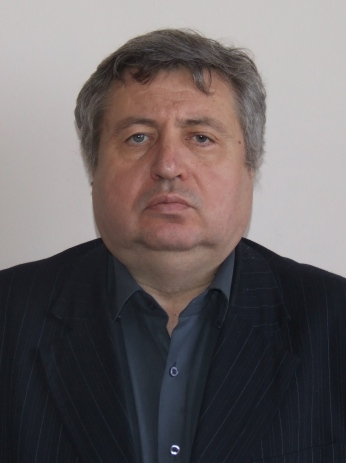
Directors of the Institute
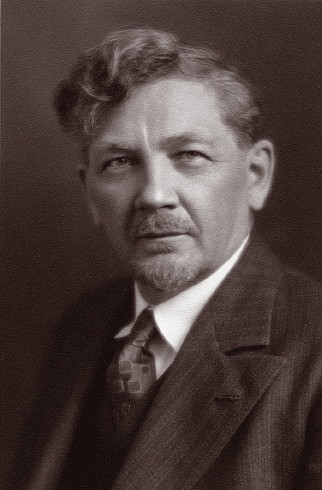
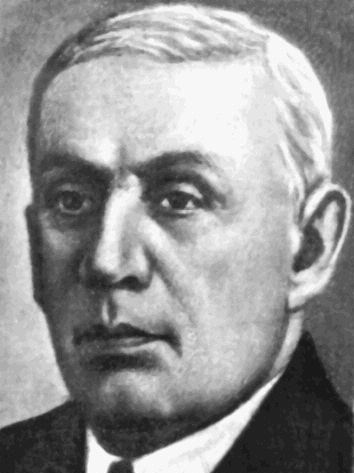
Since its foundation, the Institute has been led by eleven scientists. Each worked in a distinct historical period, ensuring continuity of scientific schools, the development of new fields and the preservation of the Institute’s academic traditions.
The Institute today
Scientific structure and human resources
Today, the Institute combines fundamental research, computational modelling, experimental methods and engineering applications across the principal fields of modern mechanics.
Structure
Eleven scientific departments
The Institute’s departments cover the mechanics of composite and heterogeneous media, shell systems, coupled fields, fracture, creep, vibrations, thermoelasticity, thermoplasticity, dynamics and stability of mechanical systems.
Explore scientific departmentsScientific community
92 research staff
According to the current staff profiles, the Institute employs 33 Doctors of Sciences and 34 Candidates of Sciences and PhDs.
Institute managementPrincipal fields
From fundamental theory to practical applications
- mechanics of composite and heterogeneous media;
- mechanics of shell systems;
- mechanics of coupled fields in materials and structural elements;
- fracture mechanics and fatigue;
- dynamics and stability of mechanical systems.
Staff totals count each person once; academic-degree figures are based on the current personal profiles published on the Institute website.
Training scientific personnel
New generations of researchers
Training researchers has traditionally been one of the Institute’s central roles. Postgraduate study began to develop actively in 1934, combining formal education with work in scientific departments, participation in seminars, and fundamental and applied research.
Today, the Institute trains Doctors of Philosophy in specialityF1 Applied Mathematics / 113 Applied Mathematicsunder the educational and scientific programme “Mechanics of Deformable Solids and Theoretical Mechanics”, and also trains candidates for the Doctor of Sciences degree.
Postgraduate studies
Admission, the educational and scientific programme, curricula, postgraduate students and supervisors.
Open section →DScDoctoral studies
Training for the Doctor of Sciences degree, admission rules and scientific and methodological support.
Open section →DefencesDissertations
Announcements, defence materials, conclusions, opponent reviews and the dissertation archive.
Open section →Researcher certification
Specialised academic councils and dissertation defences
Specialised academic councils operate at the Institute. The defence pages bring together current announcements and archival materials, including dissertation and abstract texts, conclusions, official opponent reviews and meeting videos where available.
Scientific publications
Monographs and the journal Applied Mechanics
The Institute’s publishing activity reflects the evolution of its scientific schools, from fundamental multivolume works to contemporary international collective monographs and a specialist journal with a long history.
Book heritage
Multivolume works and contemporary monographs
The major collective editions include series on shell calculation methods, composite mechanics, spatial problems of elasticity and plasticity, coupled fields, nonclassical fracture mechanics, as well as the multivolume collectionsAdvances in Mechanics and Modern Problems of Mechanics.
International collective publications
Springer books involving Institute researchers
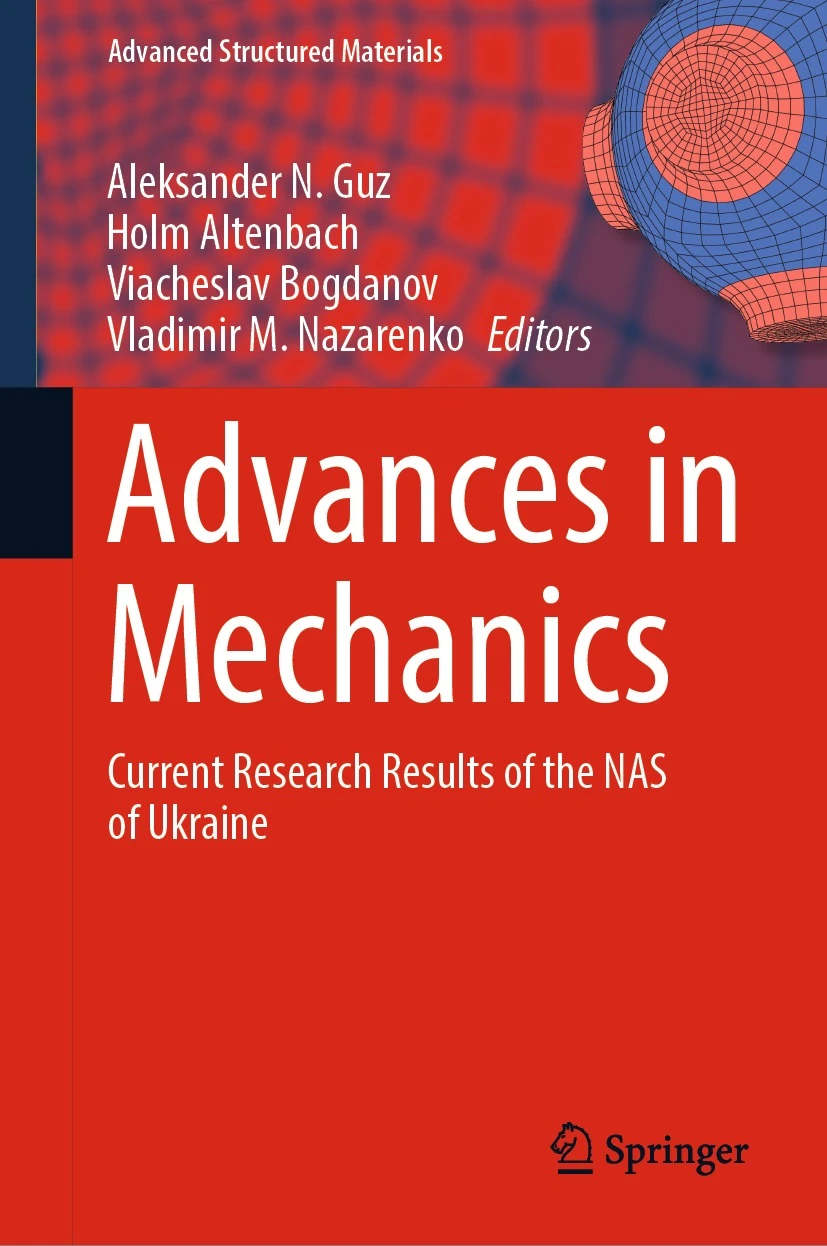
Advances in Mechanics
Current Research Results of the NAS of Ukraine
Editors: Aleksander N. Guz, Holm Altenbach, Viacheslav Bogdanov, Vladimir M. Nazarenko
This collective monograph summarises contemporary results obtained by institutions of the NAS of Ukraine in composite and fracture mechanics, the strength of materials and structures, thermoviscoelasticity and plasticity, shell mechanics, contact mechanics, wave propagation, and the dynamics of mechanical and hydromechanical systems. The volume is dedicated to the 145th anniversary of S.P. Timoshenko.
View book at Springer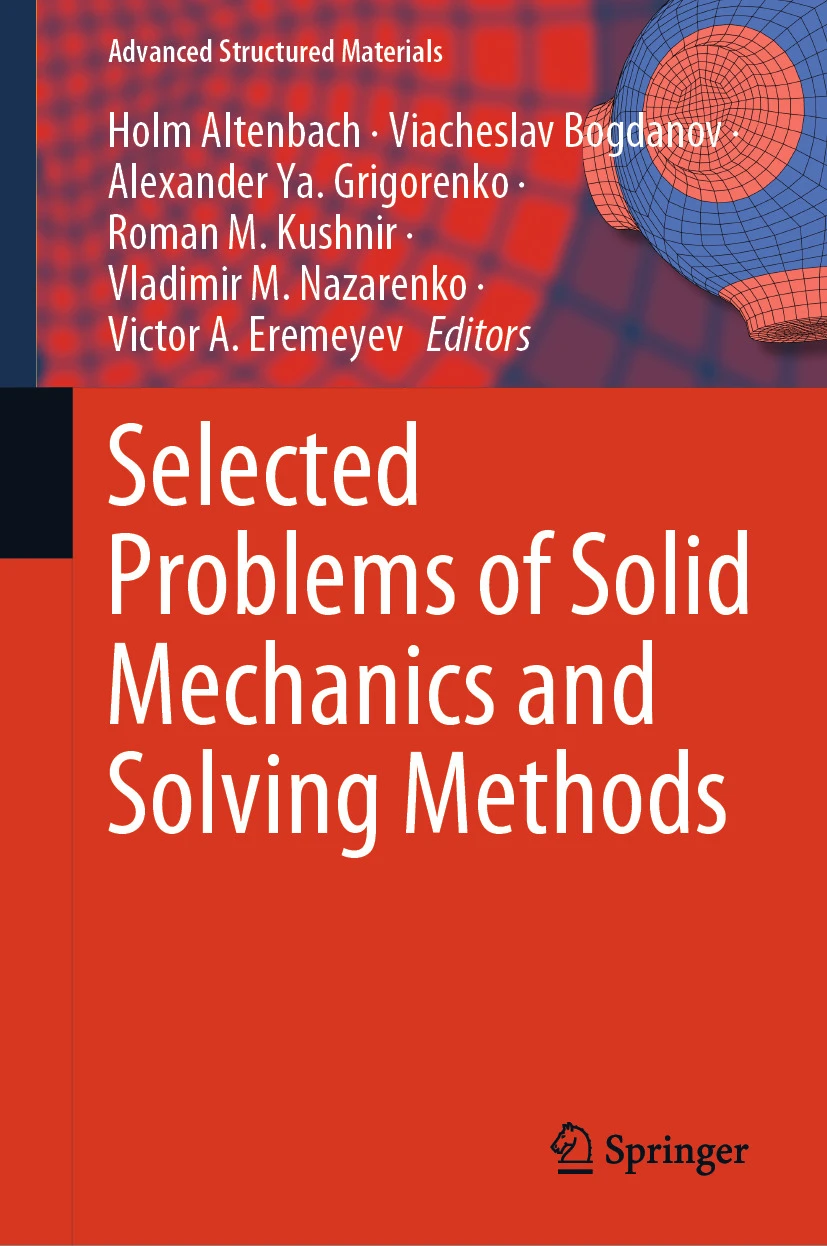
Selected Problems of Solid Mechanics and Solving Methods
Editors: Holm Altenbach, Viacheslav Bogdanov, Alexander Ya. Grigorenko, Roman M. Kushnir, Vladimir M. Nazarenko, Victor A. Eremeyev
The monograph presents new approaches to estimating errors in approximate theories and methods for constructing governing equations in mechanics. It brings together analytical and numerical approaches from different scientific schools that are also applicable in physics, mathematics and civil engineering. Individual chapters address fracture, thermoplasticity, contact problems, shells, vibrations and wave processes.
View book at SpringerForthcoming publication
Fracture Mechanics and Adjacent Fields: Insights from Ukrainian Research
Springer plans to publish this two-volume collective monograph in September 2026. It is devoted to fracture mechanics and adjacent fields developed by Ukrainian schools of mechanics.
Scientific periodical
Applied Mechanics / International Applied Mechanics
The journal has been published at the Institute since 1955. Its English translation appeared from 1965 as Soviet Applied Mechanics and from 1992 asInternational Applied Mechanics. Springer has published the English edition since 2004.
The journal publishes original and review papers in solid mechanics, mechanics of structural elements and engineering mechanics.
Open the journal websiteDetailed bibliographic catalogues and thematic collections are available in theScientific Library section.
Major collective editions
Eight multivolume series
- Methods for Calculating Shells — 5 volumes
- Mechanics of Composite Materials and Structural Elements — 3 volumes
- Spatial Problems of the Theory of Elasticity and Plasticity — 6 volumes
- Mechanics of Coupled Fields in Structural Elements — 5 volumes
- Nonclassical Problems of Fracture Mechanics — 4 volumes in 5 books
- Mechanics of Composites — 12 volumes
- Advances in Mechanics — 6 volumes in 7 books
- Modern Problems of Mechanics — 3 volumes
Journal history
From Soviet Applied Mechanics to International Applied Mechanics
From 1965, the journal Applied Mechanics was translated in the United States as Soviet Applied Mechanics, initially by The Faraday Press and, from 1968, by Plenum Publishing Corporation. Since 1992, the English edition has appeared asInternational Applied Mechanics, first with Kluwer Academic Publishers and, since 2004, with Springer.
In 2000–2009 alone, the journal published approximately 170 comprehensive review articles written by prominent scientists from 26 countries.
Journal websiteInternational links
Scientific cooperation and representation of Ukraine
The Institute develops joint research, prepares collective monographs and papers, maintains direct links with universities and research centres in different countries, and participates in the international coordination of research in mechanics.
Joint research
Partner research centres
Together with international colleagues, Institute researchers conduct studies and publish monographs and papers on current problems in the mechanics of materials and structures, fracture, stability and dynamics.
International coordination
National Committee of Ukraine for Theoretical and Applied Mechanics
Since 1992, the Institute has served as the host organisation of the National Committee of Ukraine for Theoretical and Applied Mechanics. The Committee represents Ukraine in the International Union of Theoretical and Applied Mechanics (IUTAM).
Chair of the National Committee during the first three decades of its activity.
Chair of the National Committee at the present stage.
International integration
Community, publications and conferences
The Institute’s international links are realised through joint research projects, academic agreements, participation in conferences and international organisations, collective publications and the journal International Applied Mechanics.
Sources
Materials and bibliography
The historical part of this page is based on an authorial text by Academician V.L. Bogdanov. Information on the current structure, staff, researcher training, publications and cooperation has been updated from the Institute’s official website.
Principal source
Authorial material by V.L. Bogdanov
Bogdanov V.L. S.P. Timoshenko Institute of Mechanics: History and Present. Article manuscript prepared for the Institute’s official website.
This material provides the basis for the account of the Institute’s foundation, scientific schools, research development, publishing activity and international links.
Official website
Current institutional information
Article bibliography
Publications underpinning the historical account
- Institute of Mechanics (1919–1989) / executive editor A.N. Guz; compiled by A.N. Guz, Yu.N. Nemish and B.P. Humeniuk. Kyiv: Naukova Dumka, 1989. 144 p. [in Russian].
- S.P. Timoshenko Institute of Mechanics / executive editor A.N. Guz; compiled by Yu.N. Nemish. Kyiv: A.S.K., 1998. 248 p. [in Russian].
- S.P. Timoshenko Institute of Mechanics of the NAS of Ukraine (1918–2008): 90 Years of the Institute (History, Structure and Information Aspects) / general editor A.N. Guz; compiled by I.S. Chernyshenko and Ya.Ya. Rushchytskyi. Kyiv: Litera LTD, 2008. 320 p. [in Russian].
- Guz A.N. On the 100th Anniversary of the S.P. Timoshenko Institute of Mechanics of the National Academy of Sciences of Ukraine. Kyiv: Litera LTD, 2018. 160 p. [in Russian].
- Guz A.N., Rushchitsky J.J. For the 100th Anniversary of the S.P. Timoshenko Institute of Mechanics of the NASU: Books (Monographs and Textbooks) Published by the Institute. International Applied Mechanics. 2018. Vol. 54, No. 2. P. 121–142.
- Guz A.N., Altenbach H., Bogdanov V.L., Nazarenko V.M. Preface. In: Advances in Mechanics. Advanced Structured Materials, vol. 191. Cham: Springer, 2023. P. v–xv.
- Altenbach H., Bogdanov V., Bulat A., Guz A., Nazarenko V. A Brief Review of the Development of Mechanics in the National Academy of Sciences of Ukraine. In: Advances in Mechanics. Advanced Structured Materials, vol. 191. Cham: Springer, 2023. P. 1–19.
External resources
Publications and official websites
- Official Institute profile on the NAS of Ukraine portalInstitutional profile, management and contact information (in Ukrainian)
- Advances in Mechanics: Current Research Results of the NAS of UkraineSpringer, Advanced Structured Materials, vol. 191, 2023
- Selected Problems of Solid Mechanics and Solving MethodsSpringer, Advanced Structured Materials, vol. 204, 2024
- Applied Mechanics / International Applied MechanicsOfficial journal website
- National Committee of Ukraine for Theoretical and Applied MechanicsOfficial Committee website